Set Up a Quick Plagiarism Checker with Brightspace.
With Plagiarismdetector.net’s powerful API, integration is just a few clicks away.

With Plagiarismdetector.net’s powerful API, integration is just a few clicks away.


Integrate the plagiarism checker with Brightspace for a streamlined view that clearly presents key data, transforming results into quick and actionable insights.

Brightspace empowers educators to design engaging and impactful online learning experiences built on strong pedagogical foundations.
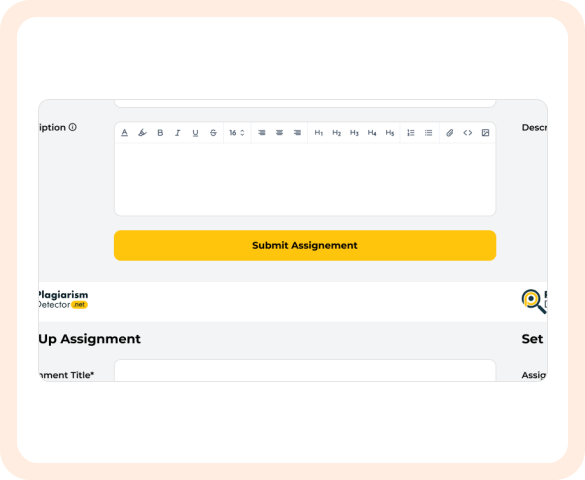
Easy setting up of assignments along with flexible options provided by our advanced plagiarism detection tool.
When a student submits work, the tool instantly scans for:
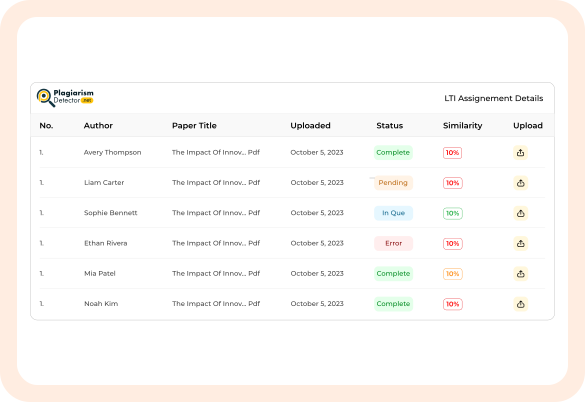
Brightspace plagiarism checker not only protects academic integrity but also elevates the teaching process and guides students toward producing refined, original work.

Confidently determine content originality

Compare similarities with original texts

High accuracy in identifying even minor plagiarism
Confidently determine content originality
Compare similarities with original texts
High accuracy in identifying even minor plagiarism
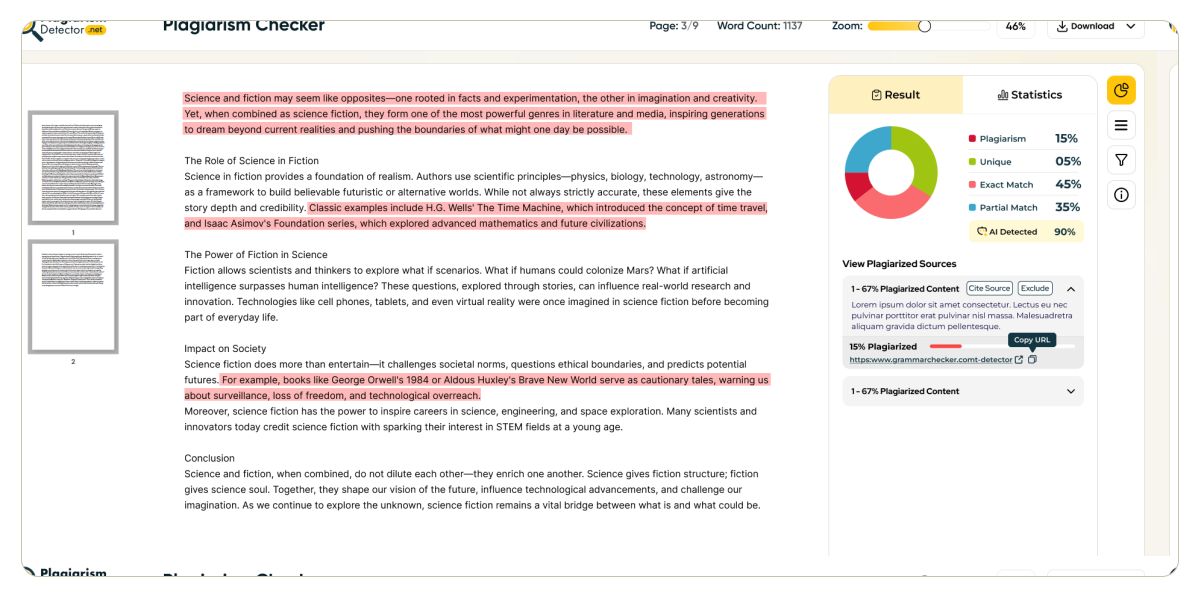
Brightspace Plagiarism Checker maintains content originality by scanning billions of sources, identifying similarities, and ensuring every submission is authentic and unique.
The 21st century is witnessing a dramatic reshaping of the global order. The unipolar dominance of the United States, which followed the Cold War, is gradually giving way to a multipolar world, where power is more broadly distributed among various influential states.
The 21st century is witnessing a dramatic reshaping of the global order. The unipolar dominance of the United States, which followed the Cold War, is gradually giving way to a multipolar world, where power is more broadly distributed among various influential states.
The 21st century is witnessing a dramatic reshaping of the global order. The unipolar dominance of the United States, which followed the Cold War, is gradually giving way to a multipolar world, where power is more broadly distributed among various influential states.
The 21st century is witnessing a dramatic reshaping of the global order. The unipolar dominance of the United States, which followed the Cold War, is gradually giving way to a multipolar world, where power is more broadly distributed among various influential states.
The 21st century is witnessing a dramatic reshaping of the global order. The unipolar dominance of the United States, which followed the Cold War, is gradually giving way to a multipolar world, where power is more broadly distributed among various influential states.
The 21st century is witnessing a dramatic reshaping of the global order. The unipolar dominance of the United States, which followed the Cold War, is gradually giving way to a multipolar world, where power is more broadly distributed among various influential states.
The 21st century is witnessing a dramatic reshaping of the global order. The unipolar dominance of the United States, which followed the Cold War, is gradually giving way to a multipolar world, where power is more broadly distributed among various influential states.
The 21st century is witnessing a dramatic reshaping of the global order. The unipolar dominance of the United States, which followed the Cold War, is gradually giving way to a multipolar world, where power is more broadly distributed among various influential states.

I really like how fast the originality check works after integrating Brightspace with PlagiarismDetector.Net. It shows exactly what needs editing so I can fix mistakes before my teacher sees them.

The accuracy is outstanding. It helps me guide students toward stronger writing while ensuring academic integrity.
I can review assignments much faster thanks to PlagiarismDetector.Net, which integrates with Brightspace for reporting. The color-coded highlights make everything so clear.
When students know their work will be checked for originality, they are motivated to think critically and express their ideas creatively. Over time, this fosters a habit of writing original, well-researched papers that reflect genuine understanding rather than copied information.
It ensures that each student contributes original material. It enhances accountability and ensures that all the students are equally responsible for maintaining the originality and credibility of their work.
By integrating a plagiarism detector into Brightspace, educational institutions demonstrate their commitment to maintaining academic integrity. This not only builds trust among students and faculty but also enhances the institution's credibility.
Plagiarism detection reports can help educators identify patterns of unoriginal work or recurring citation mistakes among students. This data allows teachers to address these issues early and incorporate targeted lessons or resources to improve academic writing skills.
